Matches auto-pass, mismatches go to a person
Upload the receipt photos: clear matches pass automatically, and the staffer confirms only the few mismatched items, each with its evidence.
Upload receipts
Handwritten/POS receipt photos + settlement spreadsheet.
AI reads them
Extract shop name, amount, and items from the image.
Auto-reconcile amounts
Match against the spreadsheet and sort into buckets.
Only what to check
Only mismatches go to a person, with evidence.
Close & transfer file
Generate the corrected copy and bulk-transfer file.
AI reads even handwritten receipts
AI reads both POS receipts (half) and handwritten ones (half) to extract shop name, amount, and items. When the shop name is faded or misread, it reinforces the reading using the account and business-registration numbers.
- Reads both handwritten and POS receipts (once per image)
- Normalizes misread shop names to the canonical business name
- Uses account and business-registration numbers as evidence to reinforce name reading
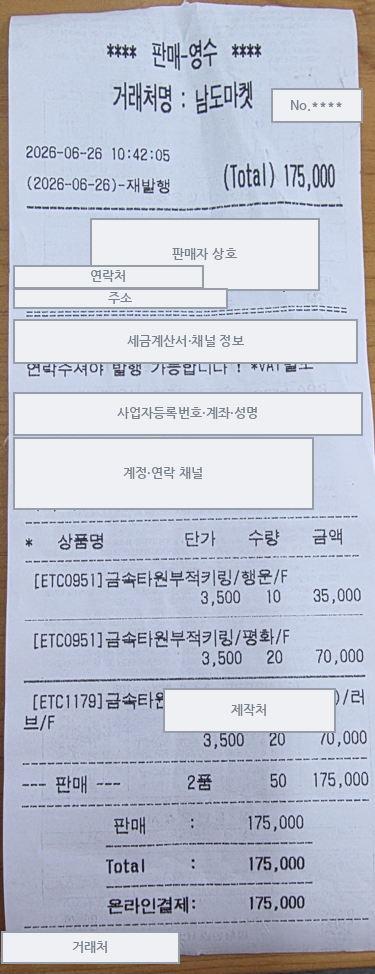
Auto-reconcile against the spreadsheet → point out only what to check
It matches the read amount against the settlement spreadsheet, auto-passes exact matches, and flags only the mismatches as "amount discrepancy." Instead of 800 receipts, a person sees only the handful that don't match.
- Matches in order: exact match → VAT tolerance → digit-error back-tracing
- Auto-passed items are bulk-approved with one button
- Never auto-confirms even with a single candidate — the final call is a person's
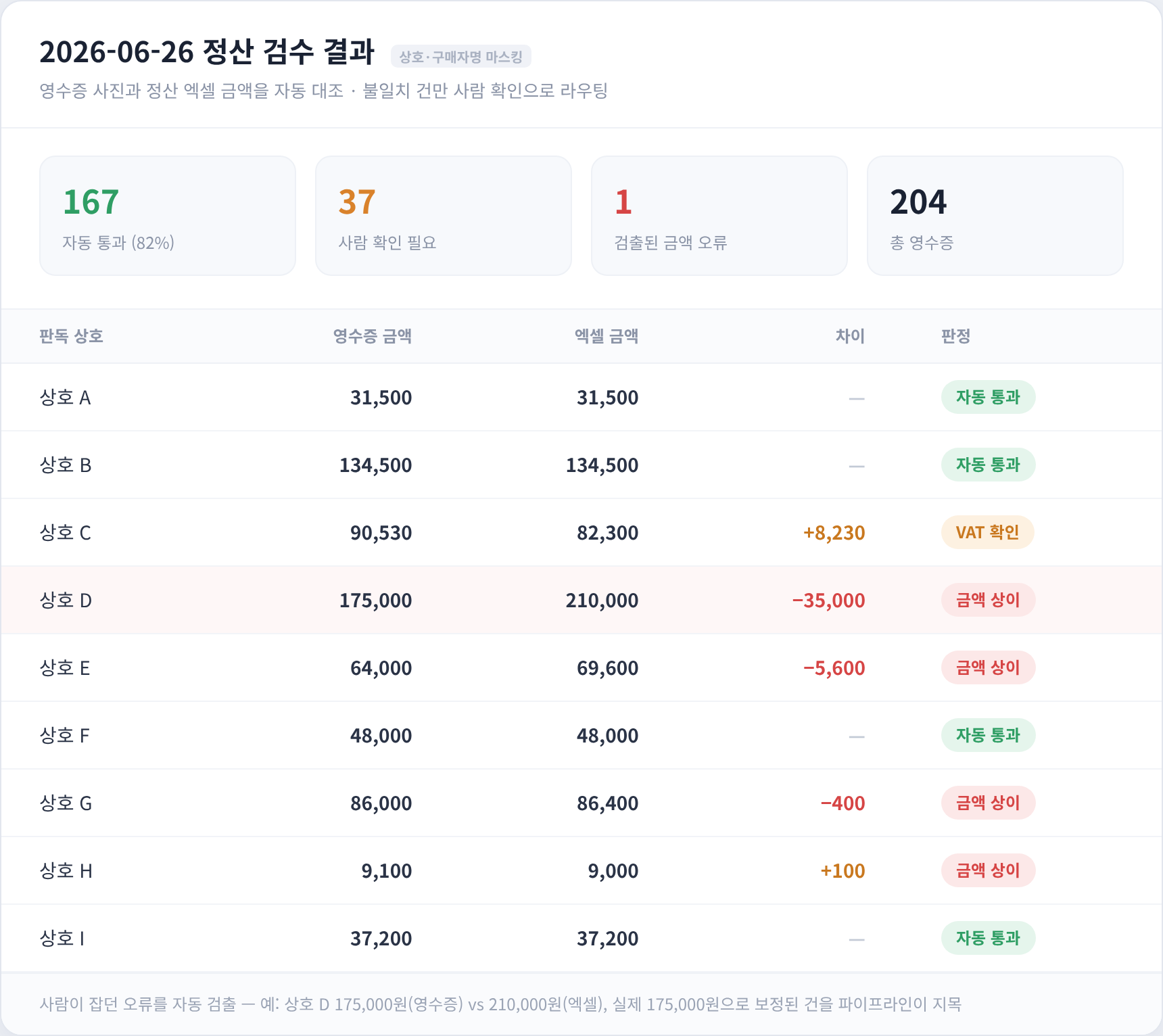
The original spreadsheet is never touched
Because settlement means real money, we never edit the original file directly. Only the decisions a person makes are stacked separately, and at download time they're turned into a "corrected copy" and a bank bulk-transfer file.
- Original immutable + decisions kept separate — the basis for each change remains for audit
- Re-uploading the photos/spreadsheet preserves decisions already made
- After confirmation, the corrected settlement copy + bulk-transfer file are generated automatically
The errors a person used to catch through overtime (e.g. a −₩35,000 gap) are flagged by the pipeline, so the staffer only has to check those.