Don't guess — verify, and ask back
Upload recording → company dictionary → transcription → selective correction → angle selection → article draft. It keeps running on the server even if you close the window, and hands off to the reporter whenever judgment is needed.
Company dictionary
Pre-register proper nouns from press releases and IR.
Transcription
Transcribe the recording by speaker.
Selective correction
The reporter reviews only the ambiguous cases.
Angle selection
Set the article's angle and structure.
Draft + verify
A draft with quotes checked against the source.
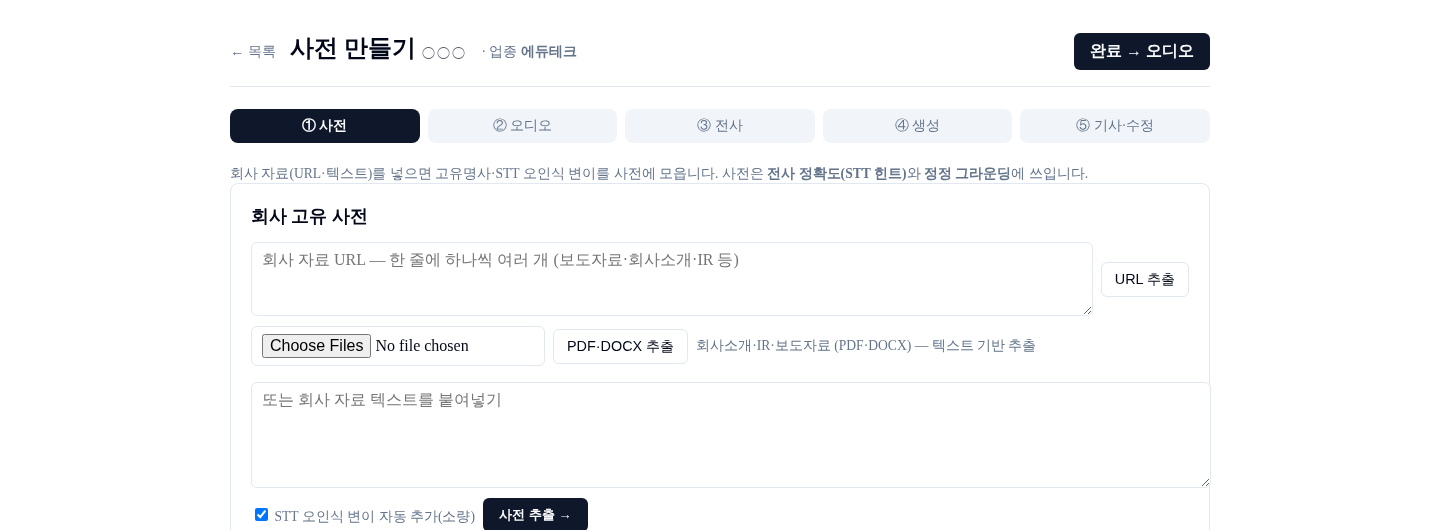
A company dictionary raises transcription accuracy up front
Feed in the company's press releases and IR (links, PDFs, text) before the interview, and it gathers proper nouns and easily-misheard phrases in advance to use as the basis for transcription and correction.
- Register proper nouns like company names, product names, and investment amounts up front
- Secure likely misrecognition candidates in advance to reduce errors
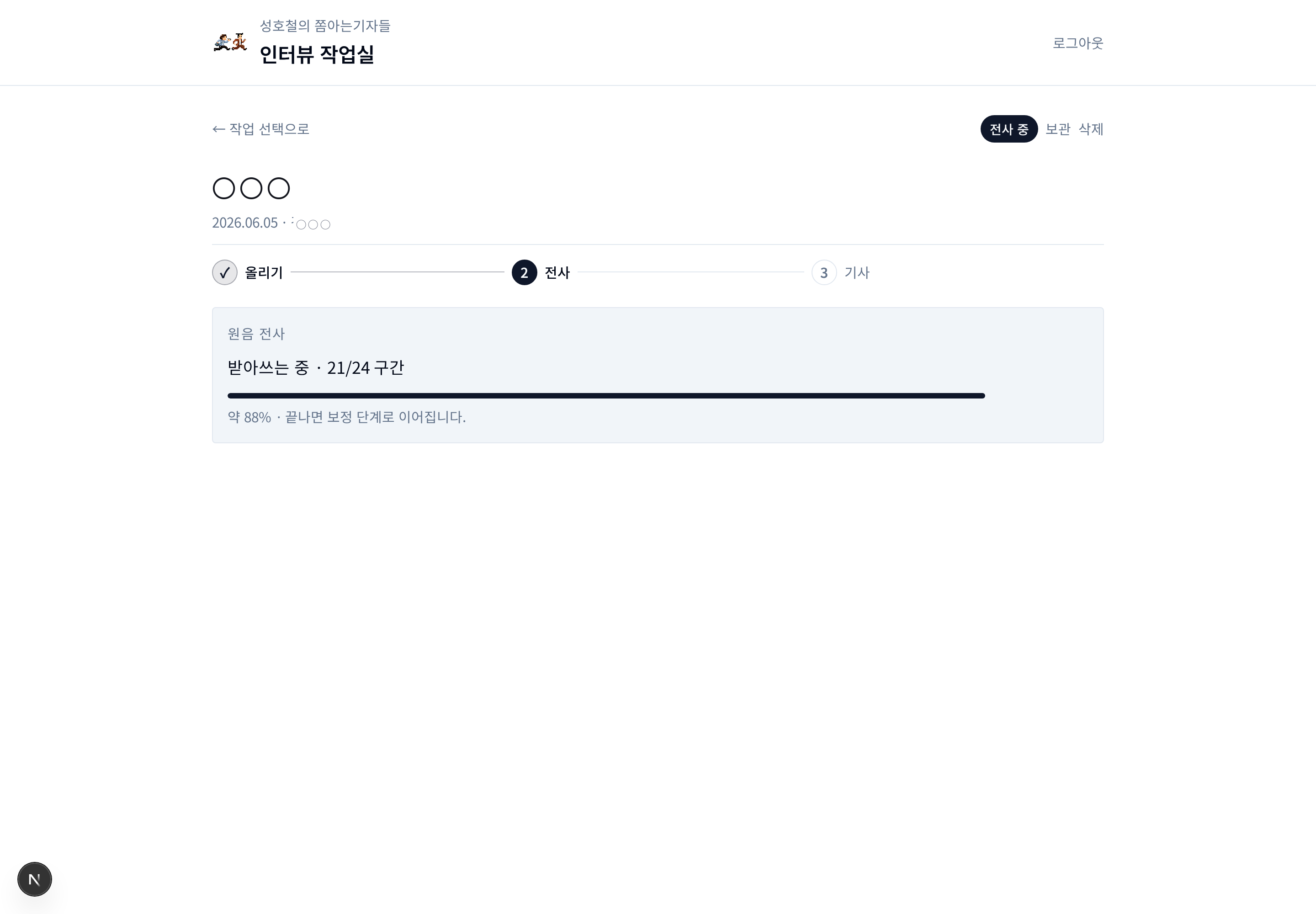
When unsure, it doesn't guess — it asks the reporter
It auto-corrects obvious transcription errors, but for anything ambiguous — and numbers and dates it never auto-corrects — it asks the reporter to confirm. It shows the original audio for that segment along with the surrounding context, so the reporter only has to choose accept, keep original, or hold.
- No auto-correction of numbers/dates — a wrong error can't slip in silently
- Audio playback + surrounding context for a quick judgment
- The reporter is the decision-maker during writing, not a post-hoc checker
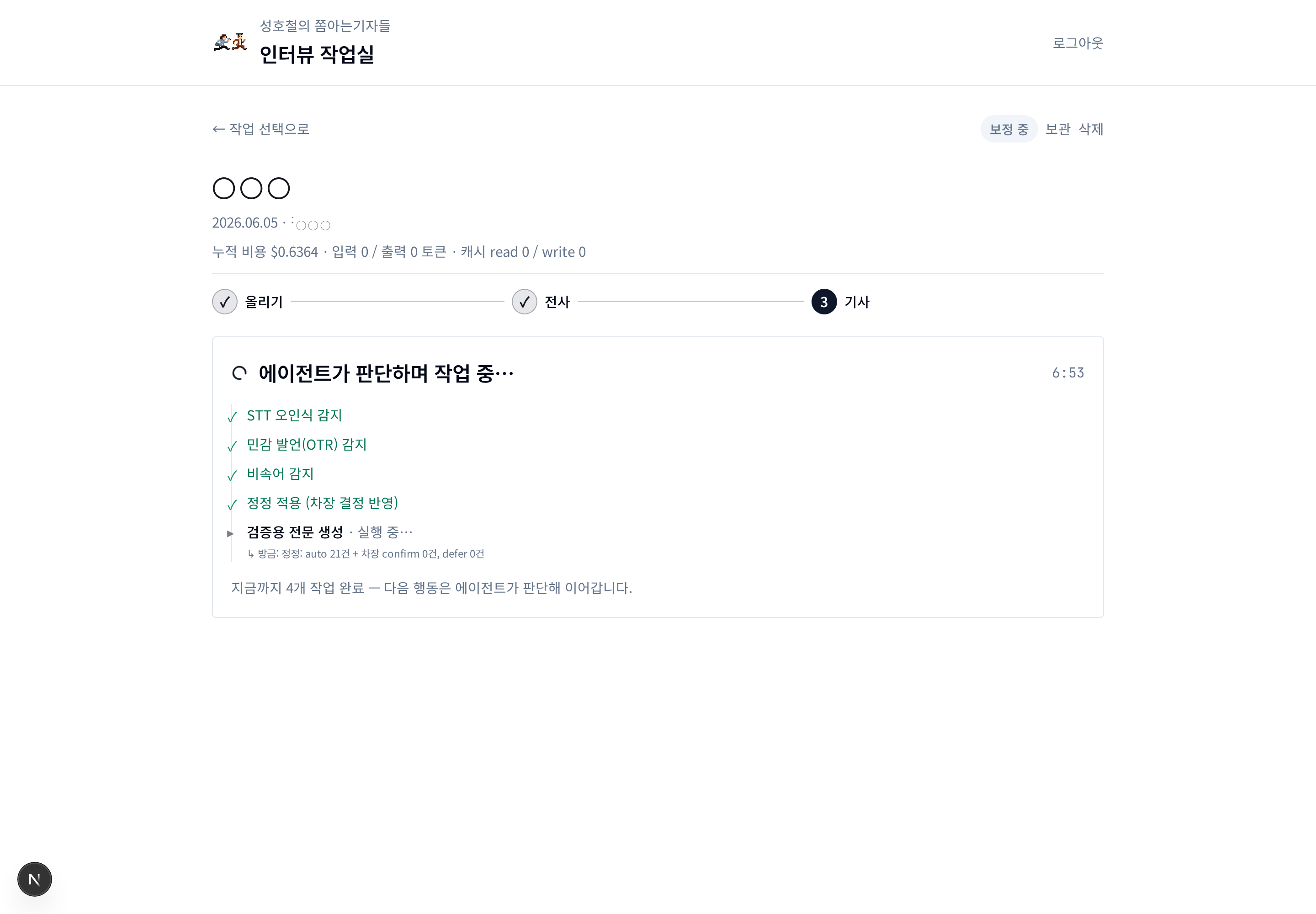
It checks its own quotes against the source and rewrites what's wrong
It checks every quote in the draft against the source one by one, rewrites only the paragraphs that don't match, and re-verifies — repeating the loop on its own. It also detects and flags unsupported statements (fabricated facts).
- Check every quote against the source → rewrite only the mismatches → verify again
- Detect and flag statements without a source
- Every edit records who, what, and why — traceable and reversible
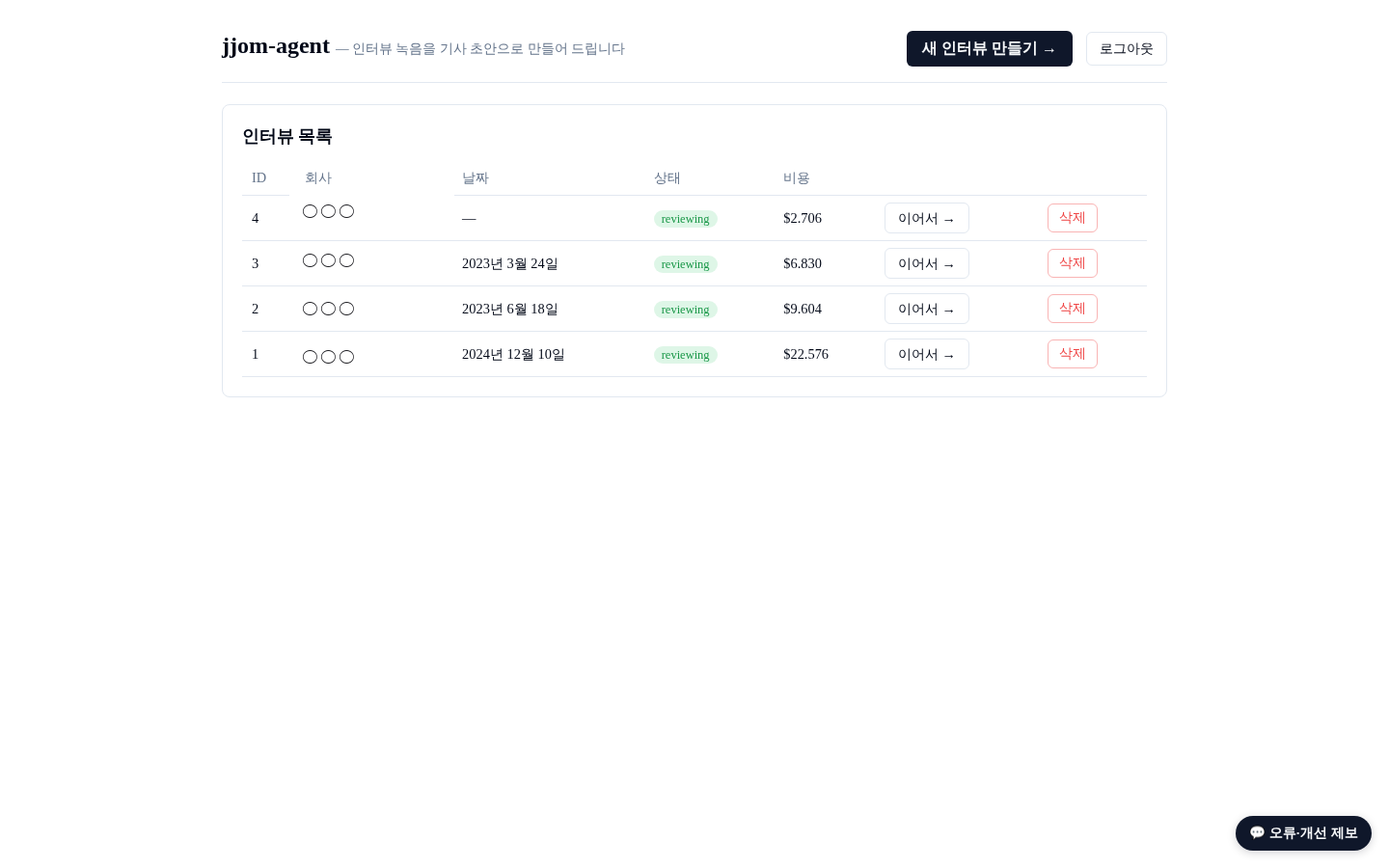
Progress and cost per interview, at a glance
Check each interview's progress and generation cost on a dashboard, and pick up work again anytime. It sets the angle first and reconstructs the material as an "article" rather than in interview time order.
- Transparently shows per-interview status and per-item cost
- Drafts in the tone and terminology of the reporter's past articles
- Resume after interruption — the writing context is preserved on the server
Rules like no auto-correction of numbers and source-verification of quotes are nailed down as code contracts (L1–L7), so distortion can't get in to begin with.